Senate Outlook for 2008

Can Democrats Take Advantage of the Turf?

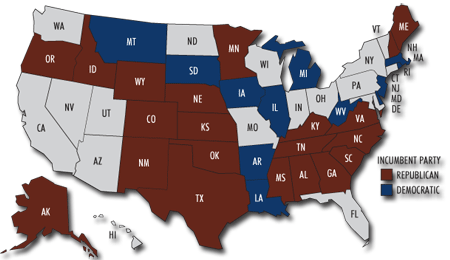
Mississippi Alabama Georgia South Carolina North Carolina Tennessee West Virginia Kentucky Virginia Delaware Rhode Island Massachusetts Maine New Hampshire Michigan Alaska Louisiana Arkansas Iowa Minnesota Texas Oklahoma Kansas Nebraska South Dakota New Mexico Colorado Wyoming Montana Idaho Oregon

View All Races

View All Races

Current partisan breakdown: 51 Democrats (including 2 caucusing Inds.), 49 Republicans

Read the latest article on the 2008 Senate contests.

Lots of exciting changes have occurred in the nation's Senate races in the first part of 2008. Yet overall, the outlook hasn't changed much. Democrats will pick up seats to pad their slim 51-to-49 margin. They are defending a mere 12 seats, and all their incumbents are running again.

The Republicans have drawn the short straw, trying to protect 23 seats with five incumbents retiring in a tough political environment for the GOP.

It is still too early to project the exact size of expected Democratic gains, but it will be a major surprise if Democrats fail to add at least three or four seats. The total of projected Democratic gains may well rise considerably, possibly five to seven, depending on the electoral conditions prevailing in the fall.

The GOP's only real hope in Senate contests is that John McCain wins the Presidency handily, generating coattail in some key match-ups. In any event, the Democrats currently seem unlikely to hit the magic number of 60 seats, needed to shut down filibusters.

The Senate has changed party control six times: in 1980 (D to R), 1986 (R to D), 1994 (D to R), 2001 (R to D), 2002 (D to R), and 2006 (R to D). This is no longer a rare event. Still, 2008 is virtually certain not to generate a seventh such shift.

Click on the individual state pages in the map above to read why.

Sign Up and Get Crystal Ball Updates in Your Email
A More Perfect Constitution

23 Proposals to Revitalize our Constitution and Make America a Fairer Country

In the News